Zimbabwe Population: 14,030,368
«  Previous Country Previous Country | 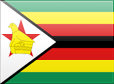 |
| History | |
| The UK annexed Southern Rhodesia from the former British South Africa Company in 1923. A 1961 constitution was formulated that favored whites in power. In 1965 the government unilaterally declared its independence, but the UK did not recognize the act and demanded more complete voting rights for the black African majority in the country (then called Rhodesia). UN sanctions and a guerrilla uprising finally led to free elections in 1979 and independence (as Zimbabwe) in 1980. Robert MUGABE, the nation's first prime minister, was the country's only ruler (as president since 1987) from independence until his resignation in November 2017. His chaotic land redistribution campaign, which began in 1997 and intensified after 2000, caused an exodus of white farmers, crippled the economy, and ushered in widespread shortages of basic commodities. Ignoring international condemnation, MUGABE rigged the 2002 presidential election to ensure his reelection. In 2005, the capital city of Harare embarked on Operation Restore Order, ostensibly an urban rationalization program, which resulted in the destruction of the homes or businesses of 700,000 mostly poor supporters of the opposition. MUGABE in 2007 instituted price controls on all basic commodities causing panic buying and leaving store shelves empty for months. General elections held in March 2008 contained irregularities but still amounted to a censure of the ZANU-PF-led government with the opposition winning a majority of seats in parliament. Movement for Democratic Change - Tsvangirai opposition leader Morgan TSVANGIRAI won the most votes in the presidential poll, but not enough to win outright. In the lead up to a run-off election in June 2008, considerable violence against opposition party members led to the withdrawal of TSVANGIRAI from the ballot. Extensive evidence of violence and intimidation resulted in international condemnation of the process. Difficult negotiations over a power-sharing "government of national unity," in which MUGABE remained president and TSVANGIRAI became prime minister, were finally settled in February 2009, although the leaders failed to agree upon many key outstanding governmental issues. MUGABE was reelected president in 2013 in balloting that was severely flawed and internationally condemned. As a prerequisite to holding the election, Zimbabwe enacted a new constitution by referendum, although many provisions in the new constitution have yet to be codified in law. In November 2017, Vice President Emmerson MNANGAGWA took over following a military intervention that forced MUGABE to resign. MNANGAGWA was inaugurated president days later, promising to hold presidential elections in 2018. In July 2018, MNANGAGWA won the presidential election after a close contest with Movement for Democratic Change Alliance candidate Nelson CHAMISA. |
 |
| |
| Geography | |
| |
| Location: | Southern Africa, between South Africa and Zambia |
| Geographic coordinates: | 20 00 S, 30 00 E |
| Area: | total: 390,757 sq km land: 386,847 sq km water: 3,910 sq km Size comparison: about four times the size of Indiana; slightly larger than Montana |
| Land Boundaries: | total: 3,229 km border countries (4): Botswana 834 km, Mozambique 1402 km, South Africa 230 km, Zambia 763 km |
| Coastline: | 0 km (landlocked) |
| Maritime claims: | none (landlocked) |
| Climate: | tropical; moderated by altitude; rainy season (November to March) |
| Terrain: | mostly high plateau with higher central plateau (high veld); mountains in east |
| Natural resources: | coal, chromium ore, asbestos, gold, nickel, copper, iron ore, vanadium, lithium, tin, platinum group metals |
| Land use: | agricultural land: 42.5% (2011 est.) arable land: 10.9% (2011 est.) permanent crops: 0.3% (2011 est.) permanent pasture: 31.3% (2011 est.) forest: 39.5% (2011 est.) other: 18% (2011 est.) |
| Irrigated land: | 1,740 sq km (2012) |
| Natural hazards: | recurring droughts; floods and severe storms are rare |
| Current Environment Issues: | deforestation; soil erosion; land degradation; air and water pollution; the black rhinoceros herd - once the largest concentration of the species in the world - has been significantly reduced by poaching; poor mining practices have led to toxic waste and heavy metal pollution |
| International Environment Agreements: | party to: Biodiversity, Climate Change, Desertification, Endangered Species, Hazardous Wastes, Law of the Sea, Ozone Layer Protection signed, but not ratified: none of the selected agreements |
| ^Back to Top | |
| People | |
| |
| Nationality: | noun: Zimbabwean(s) adjective: Zimbabwean |
| Ethnic groups: | African 99.4% (predominantly Shona; Ndebele is the second largest ethnic group), other 0.4%, unspecified 0.2% (2012 est.) |
| Languages: | Shona (official; most widely spoken), Ndebele (official, second most widely spoken), English (official; traditionally used for official business), 13 minority languages (official; includes Chewa, Chibarwe, Kalanga, Koisan, Nambya, Ndau, Shangani, sign language, Sotho, Tonga, Tswana, Venda, and Xhosa) |
| Religions: | Protestant 74.8% (includes Apostolic 37.5%, Pentecostal 21.8%, other 15.5%), Roman Catholic 7.3%, other Christian 5.3%, traditional 1.5%, Muslim 0.5%, other 0.1%, none 10.5% (2015 est.) |
| Population: | 14,030,368 (July 2018 est.) note: estimates for this country explicitly take into account the effects of excess mortality due to AIDS; this can result in lower life expectancy, higher infant mortality, higher death rates, lower population growth rates, and changes in the distribution of population by age and sex than would otherwise be expected |
| Age structure: | 0-14 years: 38.62% (male 2,681,192 /female 2,736,876) 15-24 years: 20.42% (male 1,403,715 /female 1,461,168) 25-54 years: 32.22% (male 2,286,915 /female 2,234,158) 55-64 years: 4.24% (male 233,021 /female 361,759) 65 years and over: 4.5% (male 255,704 /female 375,860) (2018 est.) |
| Dependency ratios: | total dependency ratio: 79.5 (2015 est.) youth dependency ratio: 74.4 (2015 est.) elderly dependency ratio: 5.1 (2015 est.) potential support ratio: 19.7 (2015 est.) |
| Median age: | total: 20.2 years male: 19.9 years female: 20.4 years (2018 est.) |
| Population growth rate: | 1.68% (2018 est.) |
| Birth rate: | 34 births/1,000 population (2018 est.) |
| Death rate: | 9.9 deaths/1,000 population (2018 est.) |
| Net migration rate: | -7.3 migrant(s)/1,000 population (2018 est.) |
| Urbanization: | urban population: 32.2% of total population (2018) rate of urbanization: 2.19% annual rate of change (2015-20 est.) |
| Major urban areas - population: | 1.515 million HARARE (capital) (2018) |
| Sex ratio: | at birth: 1.03 male(s)/female 0-14 years: 0.98 male(s)/female 15-24 years: 0.96 male(s)/female 25-54 years: 1.02 male(s)/female 55-64 years: 0.64 male(s)/female 65 years and over: 0.68 male(s)/female total population: 0.96 male(s)/female (2018 est.) Mother's mean age at first birth: 20 years (2015 est.) note: median age at first birth among women 25-29 |
| Maternal mortality rate: | 443 deaths/100,000 live births (2015 est.) |
| Infant mortality rate: | total: 31.9 deaths/1,000 live births male: 35.9 deaths/1,000 live births female: 27.7 deaths/1,000 live births (2018 est.) |
| Life expectancy at birth: | total population: 61.1 years male: 59 years female: 63.2 years (2018 est.) |
| Total fertility rate: | 3.97 children born/woman (2018 est.) |
| Contraceptive prevalence rate: | 66.8% (2015) |
| Physicians density: | 0.08 physicians/1,000 population (2014) |
| Hospital bed density: | 1.7 beds/1,000 population (2011) |
| Drinking water source: | improved: urban: 97% of population rural: 67.3% of population total: 76.9% of population unimproved: urban: 3% of population rural: 32.7% of population total: 23.1% of population (2015 est.) |
| Sanitation facility access: | improved: urban: 49.3% of population (2015 est.) rural: 30.8% of population (2015 est.) total: 36.8% of population (2015 est.) unimproved: urban: 50.7% of population (2015 est.) rural: 69.2% of population (2015 est.) total: 63.2% of population (2015 est.) |
| HIV/AIDS - adult prevalence rate: | 13.3% (2017 est.) |
| HIV/AIDS - people living with HIV/AIDS: | 1.3 million (2017 est.) |
| HIV/AIDS - deaths: | 22,000 (2017 est.) |
| Obesity - adult prevalence rate: | 15.5% (2016) |
| Children under the age of 5 years underweight: | 8.5% (2015) |
| Education expenditures: | 7.5% of GDP (2014) |
| Literacy: | definition: age 15 and over can read and write English (2015 est.) total population: 86.5% male: 88.5% female: 84.6% (2015 est.) |
| School life expectancy (primary to tertiary education): | total: 10 years male: 10 years female: 10 years (2013) Unemployment, youth ages 15-24: total: 16.5% male: 11.6% female: 21.2% (2014 est.) |
| ^Back to Top | |
| Government | |
| |
| Country name: | conventional long form: Republic of Zimbabwe conventional short form: Zimbabwe former: Southern Rhodesia, Rhodesia, Zimbabwe-Rhodesia etymology: takes its name from the Kingdom of Zimbabwe (13th-15th century) and its capital of Great Zimbabwe, the largest stone structure in pre-colonial southern Africa |
| Government type: | presidential republic |
| Capital: | name: Harare geographic coordinates: 17 49 S, 31 02 E time difference: UTC+2 (7 hours ahead of Washington, DC, during Standard Time) |
| Administrative divisions: | 8 provinces and 2 cities* with provincial status; Bulawayo*, Harare*, Manicaland, Mashonaland Central, Mashonaland East, Mashonaland West, Masvingo, Matabeleland North, Matabeleland South, Midlands |
| Independence: | 18 April 1980 (from the UK) |
| National holiday: | Independence Day, 18 April (1980) |
| Constitution: | history: previous 1965 (at Rhodesian independence), 1979 (Lancaster House Agreement), 1980 (at Zimbabwean independence); latest final draft completed January 2013, approved by referendum 16 March 2013, approved by Parliament 9 May 2013, effective 22 May 2013 amendments: proposed by the Senate or by the National Assembly; passage requires two-thirds majority vote by the membership of both houses of Parliament and assent by the president of the republic; amendments to constitutional chapters on fundamental human rights and freedoms and on agricultural lands also require approval by a majority of votes cast in a referendum; amended many times, last in 2017 (2019) |
| Legal system: | mixed legal system of English common law, Roman-Dutch civil law, and customary law |
| Suffrage: | 18 years of age; universal |
| Executive branch: | chief of state: President Emmerson Dambudzo MNANGAGWA (since 24 November 2017); First Vice President Constantino CHIWENGA (since 28 December 2017); note - Robert Gabriel MUGABE resigned on 21 November 2017, after ruling for 37 years head of government: President Emmerson Dambudzo MNANGAGWA (since 24 November 2017); Vice President Constantino CHIWENGA (since 28 December 2017); Vice President Kembo MOHADI (since 28 December 2017) cabinet: Cabinet appointed by president, responsible to National Assembly elections/appointments: each presidential candidate nominated with a nomination paper signed by at least 10 registered voters (at least 1 candidate from each province) and directly elected by absolute majority popular vote in 2 rounds if needed for a 5-year term (no term limits); election last held on 3 July 2018 (next to be held in 2023); co-vice presidents drawn from party leadership election results: Emmerson MNANGAGWA reelected president in 1st round of voting; percent of vote - Emmerson MNANGAGWA (ZANU-PF) 50.8%, Nelson CHAMISA (MDC-T) 44.3%, Thokozani KHUPE (MDC-N) .9%, other 3% |
| Legislative branch: | description: bicameral Parliament consists of: Senate (80 seats; 60 members directly elected in multi-seat constituencies - 6 seats in each of the 10 provinces - by proportional representation vote, 16 indirectly elected by the regional governing councils, 2 reserved for the National Council Chiefs, and 2 reserved for members with disabilities; members serve 5-year terms) National Assembly (270 seats; 210 members directly elected in single-seat constituencies by simple majority vote and 60 seats reserved for women directly elected by proportional representation vote; members serve 5-year terms) elections: Senate - last held for elected member on 30 July 2018 (next to be held in 2023) National Assembly - last held on 31 July 2013 (next to be held in 2018) election results: Senate - percent of vote by party - NA; seats by party - ZANU-PF 34, MDC Alliance 25, Chiefs 18, people with disabilities 2, MDC-T 1; composition - men 45, women 35, percent of women 43.8% National Assembly - percent of vote by party - NA; seats by party - ZANU-PF 179, MDC Alliance 88, MDC-T 1, NPF 1, independent 1; composition - men 185, women 25, percent of women 31.5%; note - total Parliament percent of women 34.3% |
| Judicial branch: | highest courts: Supreme Court (consists of the chief justice and 4 judges); Constitutional Court (consists of the chief and deputy chief justices and 9 judges) judge selection and term of office: Supreme Court judges appointed by the president upon recommendation of the Judicial Service Commission, an independent body consisting of the chief justice, Public Service Commission chairman, attorney general, and 2-3 members appointed by the president; judges normally serve until age 65 but can elect to serve until age 70; Constitutional Court judge appointment NA; judges serve nonrenewable 15-year terms subordinate courts: High Court; Labor Court; Administrative Court; regional magistrate courts; customary law courts; special courts |
| Political parties and leaders: | MDC Alliance [Nelson CHAMISA] Movement for Democratic Change - MDC-T [Thokozani KHUPE] National People's Party or NPP [Joyce MUJURU] (formerly Zimbabwe People First or ZimPF) National Patriotic Front or NPF [Ambrose MUTINHIRI] Zimbabwe African National Union-Patriotic Front or ZANU-PF [Emmerson Dambudzo MNANGAGWA] Zimbabwe African Peoples Union or ZAPU [Dumiso DABENGWA] |
| International organization participation: | ACP, AfDB, AU, COMESA, FAO, G-15, G-77, IAEA, IBRD, ICAO, ICRM, IDA, IFAD, IFC, IFRCS, ILO, IMF, IMO, Interpol, IOC, IOM, IPU, ISO, ITSO, ITU, ITUC (NGOs), MIGA, NAM, OPCW, PCA, SADC, UN, UNAMID, UNCTAD, UNESCO, UNIDO, UNMIL, UNMISS, UNOCI, UNWTO, UPU, WCO, WFTU (NGOs), WHO, WIPO, WMO, WTO |
| National symbol(s): | Zimbabwe bird symbol, African fish eagle, flame lily; national colors: green, yellow, red, black, white |
| National anthem: | name: "Kalibusiswe Ilizwe leZimbabwe" [Northern Ndebele language] "Simudzai Mureza WeZimbabwe" [Shona] (Blessed Be the Land of Zimbabwe) lyrics/music: Solomon MUTSWAIRO/Fred Lecture CHANGUNDEGA note: adopted 1994 |
| Diplomatic representation in the US: | chief of mission: Ambassador Ammon MUTEMBWA (since 18 November 2014) chancery: 1608 New Hampshire Avenue NW, Washington, DC 20009 telephone: [1] (202) 332-7100 FAX: [1] (202) 483-9326 |
| Diplomatic representation from the US: | chief of mission: Ambassador Brian A. NICHOLS (since 19 July 2018) embassy: 2 Lorraine Drive, Bluffhill, Harare mailing address: P.O. Box 3340, Harare telephone: [263] (0) 867-701-1000 FAX: [263] (4) 796-488 |
| ^Back to Top | |
| Economy | |
Zimbabwe's economy depends heavily on its mining and agriculture sectors. Following a contraction from 1998 to 2008, the economy recorded real growth of more than 10% per year in the period 2010-13, before falling below 3% in the period 2014-17, due to poor harvests, low diamond revenues, and decreased investment. Lower mineral prices, infrastructure and regulatory deficiencies, a poor investment climate, a large public and external debt burden, and extremely high government wage expenses impede the country’s economic performance. Until early 2009, the Reserve Bank of Zimbabwe (RBZ) routinely printed money to fund the budget deficit, causing hyperinflation. Adoption of a multi-currency basket in early 2009 - which allowed currencies such as the Botswana pula, the South Africa rand, and the US dollar to be used locally - reduced inflation below 10% per year. In January 2015, as part of the government’s effort to boost trade and attract foreign investment, the RBZ announced that the Chinese renmimbi, Indian rupee, Australian dollar, and Japanese yen would be accepted as legal tender in Zimbabwe, though transactions were predominantly carried out in US dollars and South African rand until 2016, when the rand’s devaluation and instability led to near-exclusive use of the US dollar. The government in November 2016 began releasing bond notes, a parallel currency legal only in Zimbabwe which the government claims will have a one-to-one exchange ratio with the US dollar, to ease cash shortages. Bond notes began trading at a discount of up to 10% in the black market by the end of 2016. Zimbabwe’s government entered a second Staff Monitored Program with the IMF in 2014 and undertook other measures to reengage with international financial institutions. Zimbabwe repaid roughly $108 million in arrears to the IMF in October 2016, but financial observers note that Zimbabwe is unlikely to gain new financing because the government has not disclosed how it plans to repay more than $1.7 billion in arrears to the World Bank and African Development Bank. International financial institutions want Zimbabwe to implement significant fiscal and structural reforms before granting new loans. Foreign and domestic investment continues to be hindered by the lack of land tenure and titling, the inability to repatriate dividends to investors overseas, and the lack of clarity regarding the government’s Indigenization and Economic Empowerment Act. | |
| GDP (purchasing power parity): | $34.27 billion (2017 est.) $33.04 billion (2016 est.) $32.82 billion (2015 est.) note: data are in 2017 dollars |
| GDP (official exchange rate): | $17.64 billion (2017 est.) |
| GDP - real growth rate: | 3.7% (2017 est.) 0.7% (2016 est.) 1.4% (2015 est.) |
| GDP - per capita (PPP): | $2,300 (2017 est.) $2,300 (2016 est.) $2,300 (2015 est.) note: data are in 2017 dollars |
| Gross national saving: | 23.3% of GDP (2017 est.) 19.1% of GDP (2016 est.) 8% of GDP (2015 est.) GDP - composition, by end use: household consumption: 77.6% (2017 est.) government consumption: 24% (2017 est.) investment in fixed capital: 12.6% (2017 est.) investment in inventories: 0% (2017 est.) exports of goods and services: 25.6% (2017 est.) imports of goods and services: -39.9% (2017 est.) GDP - composition, by sector of origin: agriculture: 12% (2017 est.) industry: 22.2% (2017 est.) services: 65.8% (2017 est.) |
| Agriculture - products: | tobacco, corn, cotton, wheat, coffee, sugarcane, peanuts; sheep, goats, pigs |
| Industries: | mining (coal, gold, platinum, copper, nickel, tin, diamonds, clay, numerous metallic and nonmetallic ores), steel; wood products, cement, chemicals, fertilizer, clothing and footwear, foodstuffs, beverages |
| Industrial production growth rate: | 0.3% (2017 est.) |
| Labor force: | 7.907 million (2017 est.) |
| Labor force - by occupation: | agriculture: 67.5% industry: 7.3% services: 25.2% (2017 est.) |
| Unemployment rate: | 11.3% (2014 est.) 80% (2005 est.) note: data include both unemployment and underemployment; true unemployment is unknown and, under current economic conditions, unknowable |
| Population below poverty line: | 72.3% (2012 est.) |
| Household income or consumption by percentage share: | lowest 10%: 2% highest 10%: 40.4% (1995) |
| Distribution of family income - Gini index: | 43.2 (2011 est.) 50.1 (2006) |
| Budget: | revenues: 3.8 billion (2017 est.) expenditures: 5.5 billion (2017 est.) |
| Taxes and other revenues: | 21.5% (of GDP) (2017 est.) Budget surplus (+) or deficit (-): -9.6% (of GDP) (2017 est.) |
| Public debt: | 82.3% of GDP (2017 est.) 69.9% of GDP (2016 est.) |
| Fiscal year: | calendar year |
| Inflation rate (consumer prices): | 0.9% (2017 est.) -1.6% (2016 est.) |
| Current account balance: | -$716 million (2017 est.) -$553 million (2016 est.) |
| Exports: | $4.353 billion (2017 est.) $3.366 billion (2016 est.) |
| Exports - commodities: | platinum, cotton, tobacco, gold, ferroalloys, textiles/clothing |
| Exports - partners: | South Africa 50.3%, Mozambique 22.5%, UAE 9.8%, Zambia 4.9% (2017) |
| Imports: | $5.472 billion (2017 est.) $5.236 billion (2016 est.) |
| Imports - commodities: | machinery and transport equipment, other manufactures, chemicals, fuels, food products |
| Imports - partners: | South Africa 47.8%, Zambia 20.5% (2017) |
| Reserves of foreign exchange and gold: | $431.8 million (31 December 2017 est.) $407.2 million (31 December 2016 est.) |
| Debt - external: | $9.357 billion (31 December 2017 est.) $10.14 billion (31 December 2016 est.) |
| Stock of direct foreign investment - at home: | $3.86 billion (31 December 2017 est.) $3.518 billion (31 December 2016 est.) |
| Stock of direct foreign investment - abroad: | $309.6 million (31 December 2017 est.) $271.6 million (31 December 2016 est.) |
| Market value of publicly traded shares: | $4.073 billion (13 April 2015 est.) $11.82 billion (31 December 2012 est.) $10.9 billion (31 December 2011 est.) |
| Exchange rates: | Zimbabwean dollars (ZWD) per US dollar - 1 (2017 est.) 1 (2016 est.) (2013) 234.25 (2010) note: the dollar was adopted as a legal currency in 2009; since then the Zimbabwean dollar has experienced hyperinflation and is essentially worthless |
| ^Back to Top | |
| Energy | |
| |
| Electricity - production: | 6.8 billion kWh (2016 est.) |
| Electricity - consumption: | 7.118 billion kWh (2016 est.) |
| Electricity - exports: | 1.239 billion kWh (2015 est.) |
| Electricity - imports: | 2.22 billion kWh (2016 est.) |
| Electricity - installed generating capacity: | 2.122 million kW (2016 est.) |
| Electricity - from fossil fuels: | 58% of total installed capacity (2016 est.) |
| Electricity - from nuclear fuels: | 0% of total installed capacity (2017 est.) |
| Electricity - from hydroelectric plants: | 37% of total installed capacity (2017 est.) |
| Electricity - from other renewable sources: | 5% of total installed capacity (2017 est.) |
| Crude oil - production: | 0 bbl/day (2017 est.) |
| Crude oil - exports: | 0 bbl/day (2015 est.) |
| Crude oil - imports: | 0 bbl/day (2015 est.) |
| Crude oil - proved reserves: | 0 bbl (1 January 2018 est.) |
| Refined petroleum products - production: | 0 bbl/day (2015 est.) |
| Refined petroleum products - consumption: | 27,000 bbl/day (2016 est.) |
| Refined petroleum products - exports: | 0 bbl/day (2015 est.) |
| Refined petroleum products - imports: | 26,400 bbl/day (2015 est.) |
| Natural gas - production: | 0 cu m (2017 est.) |
| Natural gas - consumption: | 0 cu m (2017 est.) |
| Natural gas - exports: | 0 cu m (2017 est.) |
| Natural gas - imports: | 0 cu m (2017 est.) |
| Natural gas - proved reserves: | 0 cu m (1 January 2014 est.) |
| Carbon dioxide emissions from consumption of energy: | 12.06 million Mt (2017 est.) |
| ^Back to Top | |
| Communications | |
| |
| Cellular Phones in use: | total subscriptions: 14,092,104 subscriptions per 100 inhabitants: 102 (2017 est.) |
| Telephone system: | general assessment: continued economic instability given fractious elections in 2013 and infrastructure limitations, such as reliable power, hinder progress; competition has driven rapid expansion of telecommunications, particularly cellular voice and mobile broadband, in recent years; 3 mobile network operators continue to invest in m-commerce and m-banking facilities; 3G and VoIP services are widely available with 4G/LTE service being deployed (2018) domestic: consists of microwave radio relay links, open-wire lines, radiotelephone communication stations, fixed wireless local loop installations, fiber-optic cable, VSAT terminals, and a substantial mobile-cellular network; Internet connection is most readily available in Harare and major towns; two government owned and two private cellular providers; fixed-line 2 per 100 and mobile-cellular 102 per 100 (2018) international: country code - 263; satellite earth stations - 2 Intelsat; 5 international digital gateway exchanges; fiber-optic connections to neighboring states provide access to international networks via undersea cable |
| Broadcast media: | government owns all local radio and TV stations; foreign shortwave broadcasts and satellite TV are available to those who can afford antennas and receivers; in rural areas, access to TV broadcasts is extremely limited; analog TV only, no digital service (2017) |
| Internet country code: | .zw |
| Internet users: | total: 3,363,256 percent of population: 23.1% (July 2016 est.) |
| ^Back to Top | |
| Transportation | |
| |
| Airports: | 196 (2013) |
| Airports (paved runways): | total 17 (2013) over 3,047 m: 3 (2013) 2,438 to 3,047 m: 2 (2013) 1,524 to 2,437 m: 5 (2013) 914 to 1,523 m: 7 (2013) |
| Airports (unpaved runways): | total 179 (2013) 1,524 to 2,437 m: 3 (2013) 914 to 1,523 m: 104 (2013) under 914 m: 72 (2013) |
| Pipelines: | 270 km refined products (2013) |
| Railways: | total 3,427 km (2014) narrow gauge: 3,427 km 1.067-m gauge (313 km electrified) (2014) |
| Roadways: | total 97,267 km (2019) paved: 18,481 km (2019) unpaved: 78,786 km (2019) |
| Waterways: | (some navigation possible on Lake Kariba) (2011) |
| Ports and terminals: | river port(s): Binga, Kariba (Zambezi) |
| ^Back to Top | |
| Military | |
| |
| Military branches: | Zimbabwe Defense Forces (ZDF): Zimbabwe National Army (ZNA), Air Force of Zimbabwe (AFZ) (2012) |
| Military service age and obligation: | 18-24 years of age for voluntary military service; no conscription; women are eligible to serve (2012) |
| Military expenditures: | 2.2% of GDP (2016) 2.34% of GDP (2015) 2.32% of GDP (2014) 2.34% of GDP (2013) 2.26% of GDP (2012) |
| ^Back to Top | |
| Transnational Issues | |
| |
| Disputes - International: | Namibia has supported, and in 2004 Zimbabwe dropped objections to, plans between Botswana and Zambia to build a bridge over the Zambezi River, thereby de facto recognizing a short, but not clearly delimited, Botswana-Zambia boundary in the river; South Africa has placed military units to assist police operations along the border of Lesotho, Zimbabwe, and Mozambique to control smuggling, poaching, and illegal migration |
| Refugees and internally displaced persons: | refugees (country of origin): 10,524 (Democratic Republic of Congo) (refugees and asylum seekers), 8,085 (Mozambique) (2019) IDPs: 59,125 (tropical cyclone, 2019) (2019) stateless persons: 300,000 (2016) |
| Illicit drugs: | transit point for cannabis and South Asian heroin, mandrax, and methamphetamines en route to South Africa |
| ^Back to Top | |
«
Previous Country
Source: CIA - The World Factbook